MUR (sometimes styled as “M.U.R.”), commonly expanded as MMAD Underground Resistance, is an artist collective associated with underground visual culture in Tokyo from the 1990s onward.
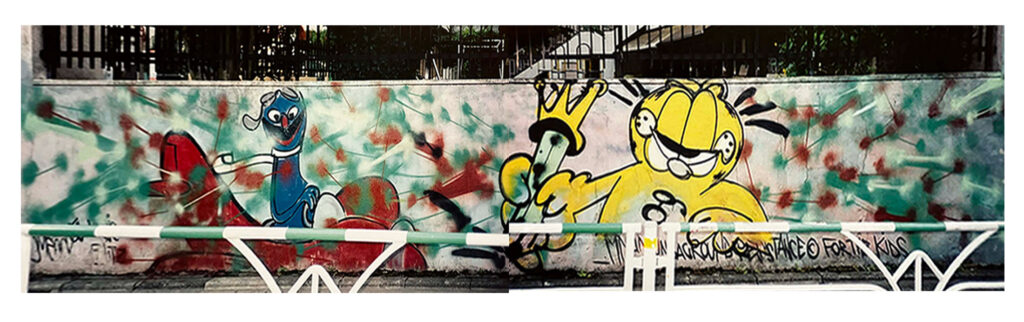
Grover vs Garfield (FOR THE KIDS), Shibuya-Daikanyama, Tokyo, first painted c. 1993 by BMega / Blitz; revised c. 1999.
Initially executed as a Grover piece and later reworked with Garfield, the wall remained largely unchallenged by local and international writers until the kindergarten’s closure in 2013, making it as one of Tokyo’s longest-surviving pieces.
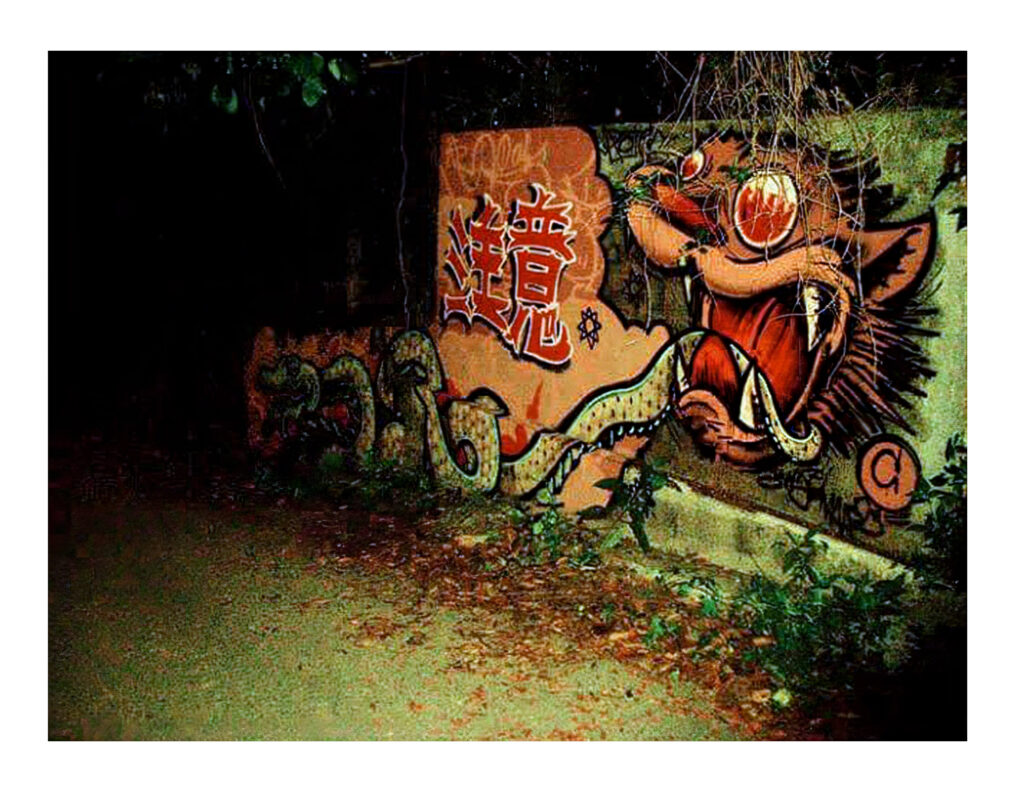
Dopesac, location presently unconfirmed, c. mid-2000s.
Later MUR-associated activity documenting the continued development of individual style within the network beyond its earlier formation period.
Historical Context
In widely circulated accounts, the emergence of graffiti culture in Japan is often traced to the early 1980s, following the introduction of hip-hop media such as the film Wild Style (1983). While this narrative remains common, it presents a simplified view of a more complex and locally adapted process.
Evidence from participants suggests that aspects of graffiti practice in Tokyo developed not only through external influence, but also through locally embedded systems of marking, territorial awareness, and symbolic communication. These approaches predate the arrival of hip-hop media and appear to have informed how graffiti was adapted and sustained within the city.

REVOLUTIONING, MUNGUSMANIA, Stickers
By the early 1990s, graffiti activity in Tokyo had developed through smaller, distributed interventions rather than large-scale mural production. These included tagging, sticker-based dissemination, repetition of symbols, and strategic placement within dense urban environments.

ALL-WAYS MUR, Ebisu, Tokyo, c. 1999.
Example of distributed naming, marking and spatial repetition within Tokyo’s urban environment.
Within this context, loosely organised artist networks began to form. These did not operate as formal collectives, but as fluid systems of collaboration and shared presence. One such network, commonly referred to as MUR (sometimes expanded as MMAD Underground Resistance), has been associated by participants with graffiti activity in areas such as Shibuya, Daikanyama, and Nakameguro.
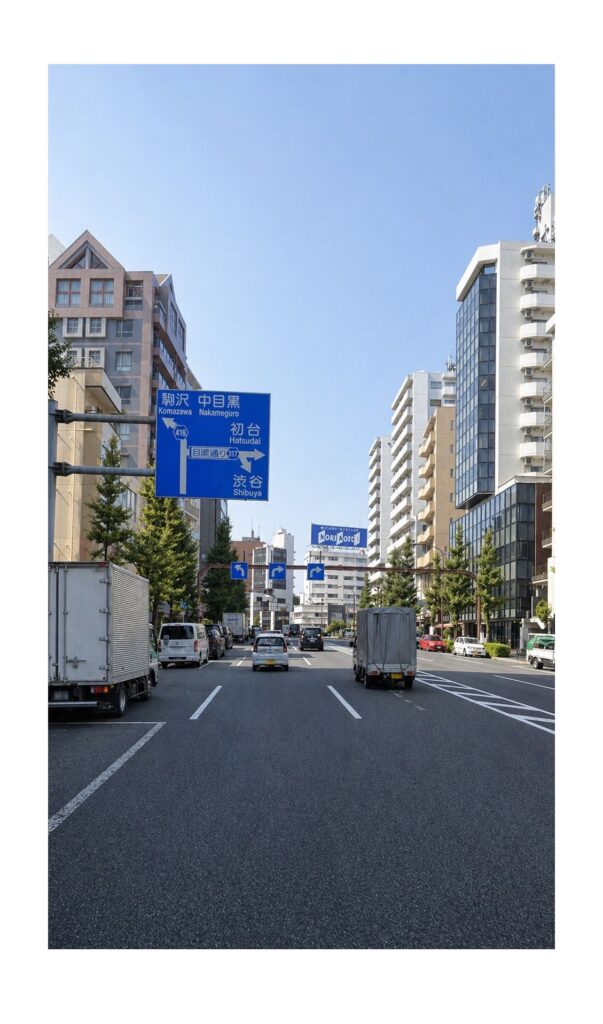
Komazawa Dori, facing towards Nakameguro, contemporary urban street view.
While MUR developed around a core group of early members, it did not operate as a fixed or formally structured organisation. Instead, it reflected a broader pattern in which artists operated under multiple aliases and moved between overlapping circles. This structure enabled both anonymity and adaptability within an environment where graffiti activity remained largely unsanctioned.
Within certain networks, including MUR and contemporaneous groups such as STM, STL, locally informed approaches were not displaced but absorbed and reinterpreted alongside imported visual languages. The result was not a direct replication of Western graffiti models, but a hybrid system shaped by both international exchange and pre-existing spatial logics.
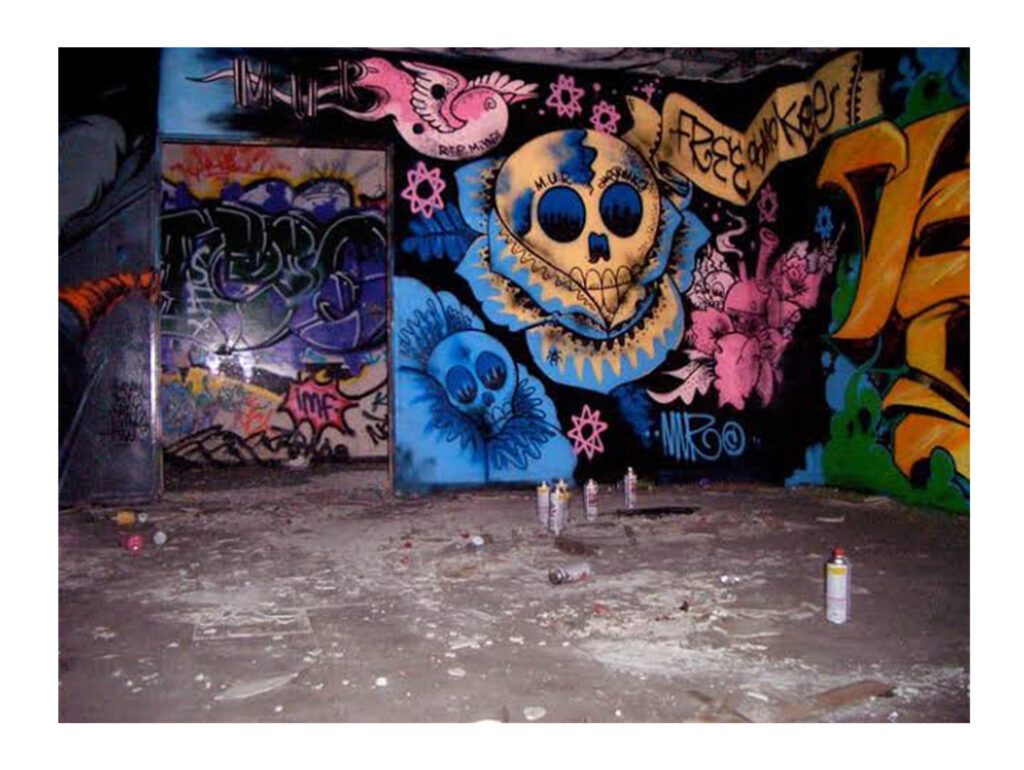
Interior graffiti environment, Tokyo, mid-2000s.
Layered graffiti environment reflecting the hybrid development of local and imported visual languages; work by Dopesac.
Accounts from individuals active during this period also point to the presence of international influence, though not in a one-directional sense. Artists from Europe and other regions passed through Tokyo, contributing to an exchange of styles and techniques, while local spatial and social conditions shaped how these practices were applied.
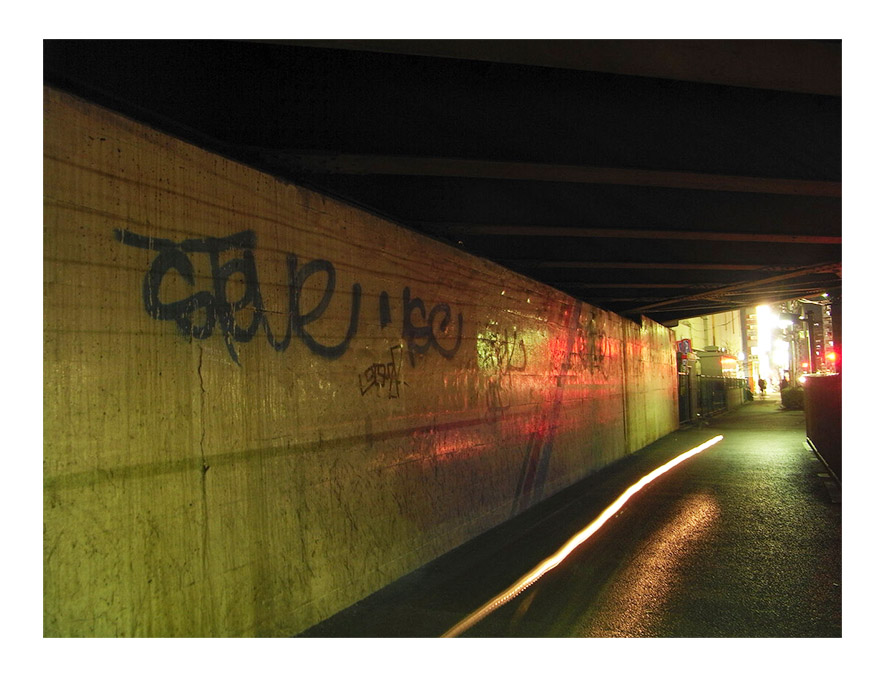
Steve, tag, 1995.
Early evidence of first-generation naming activity associated with MUR’s core formation period.
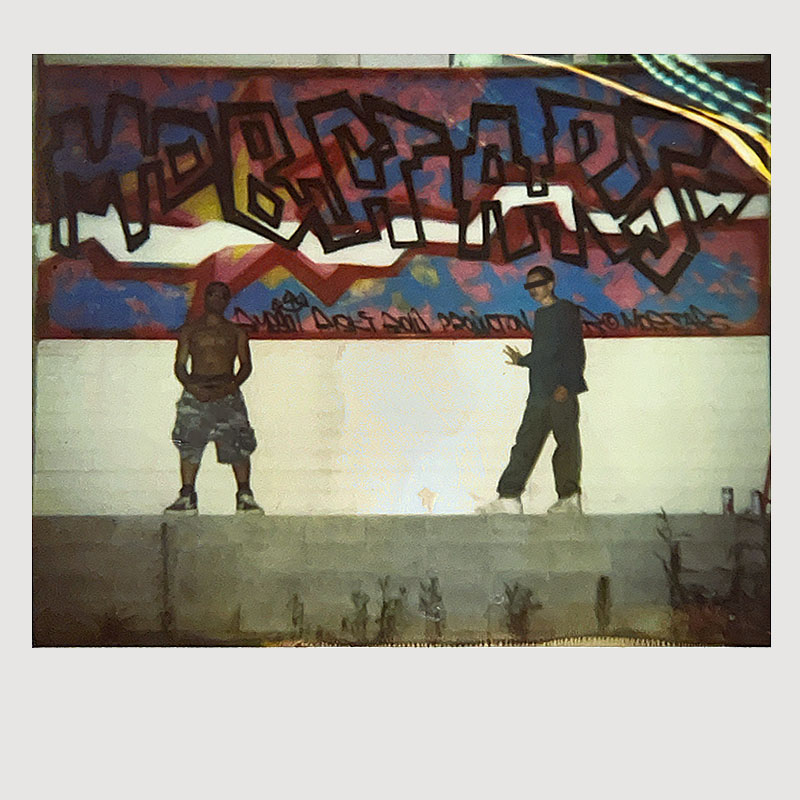
MOBSTARS commissioned wall, Kisarazu, Chiba, c. 1994.
Early commissioned wall production featuring BMega and Steve.
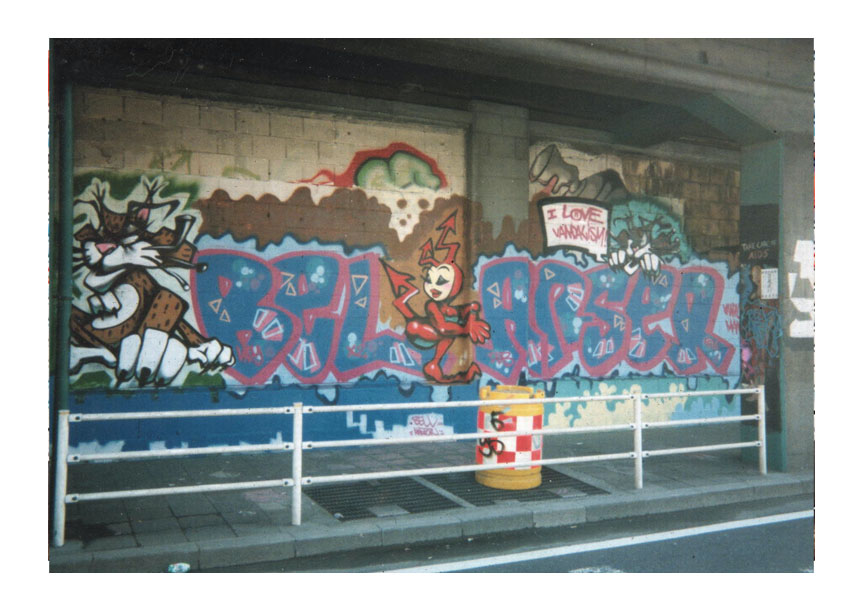
BELx2 / ANSER, 1995.
Early-era writer presence connected to the wider field around MUR, reflecting continuity, adjacency, and the persistence of related visual language beyond the group’s original formation period.
Documentation of MUR remains limited. Printed material from the period provides only partial traces, and much of its history survives through personal archives and oral accounts. As a result, the group’s role within the early development of Tokyo graffiti has often been underrepresented or interpreted through incomplete information.
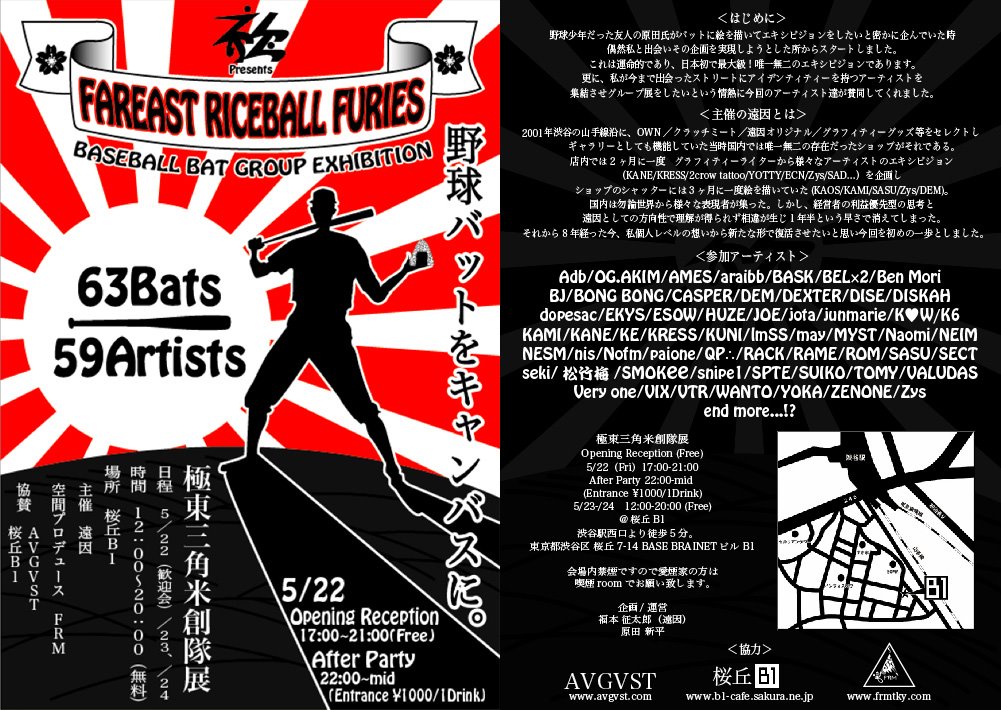
FAR EAST RICE BALL FURIES postcard flyer, c. 2006.
The reconstruction of this history is ongoing and dependent on the inclusion of first-hand accounts from participants active during the period.
Structure and Operation
MUR developed around a core first-generation membership that included BMega, Steve, Dopesac, Ame, BombaTack, and Woody. While the group’s activity extended outward through collaborators, affiliates, and overlapping circles, its internal direction was shaped by a more concentrated nucleus that met to discuss strategy, style, placement, internal philosophy, and the long-term projection of the movement.
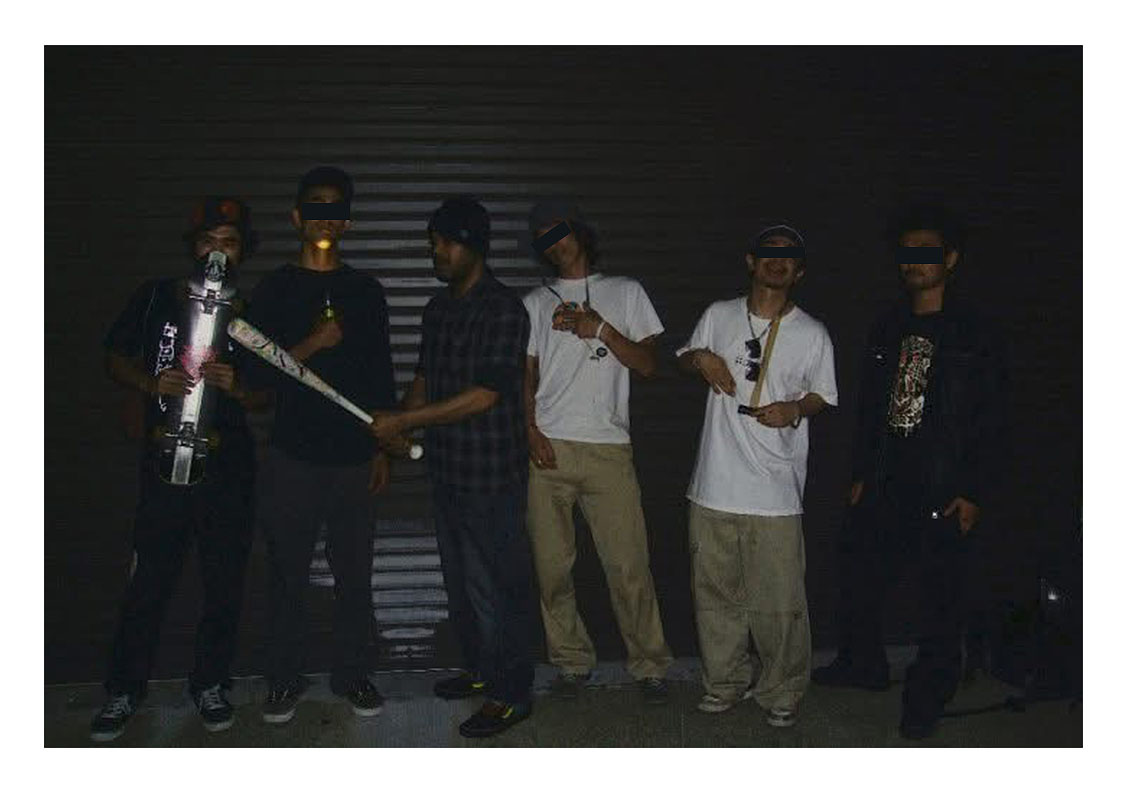
MUR, 1st and 2nd generation members, photographed at the “Far East Rice Ball Furies” exhibition c. 2006.
MUR was founded and led by BMega in 1993, with Dopesac later taking on a leading role while BMega remained the group’s shadow chairman. This structure allowed for both continuity and flexibility: a defined internal core guided direction, while a wider field of activity could expand through aliases, interventions, and associated participants.
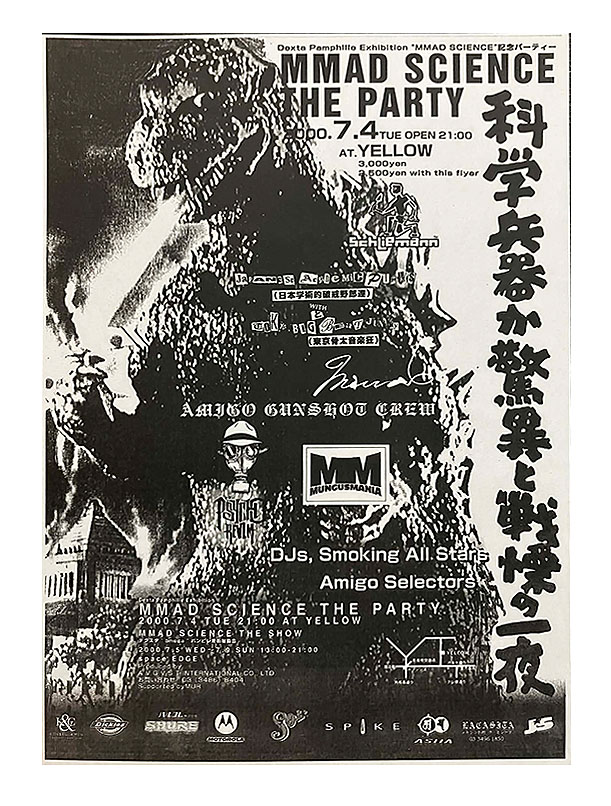
MMAD SCIENCE “THE PARTY” A4 size poster flyer, bill-sticker, bombing campaign produced and deployed by MUR, 2000.
Within this framework, MUR was not simply a name attached to isolated acts, but an organised cultural position. Its operations combined visual production, spatial strategy, internal discussion, and long-range thinking about endurance, recognition, and the movement’s future development.

Sticker-bombing surface, Tokyo, 2017.
Example of layered sticker accumulation within Tokyo’s broader street-level visual environment.
MUR also maintained an internal framework for transmitting its ideas and methods, informally referred to as “MMAD School.” This function operated as a form of initiation and orientation for individuals moving into the group’s orbit, covering theory, concepts, spatial strategy, historical context, and the underlying rationale for its activity. Rather than formal instruction, it functioned through discussion, observation, and direct participation, reinforcing a shared understanding of approach and intent across different members and associated writers.
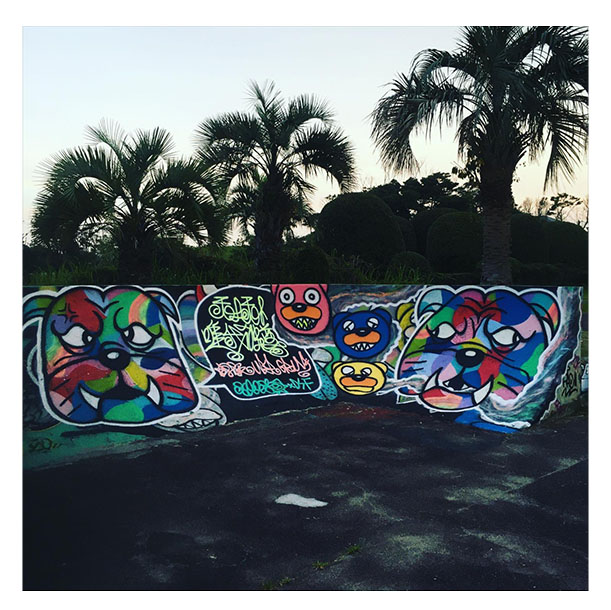
MUR, SHOCHIKUBAI, Chiba, skatepark, 2021.
Visual and Spatial Strategies
MUR’s activity is not defined by a single visual style, but by a set of spatial strategies that governed how and where marks were placed within the city and suburban environments. Rather than prioritising immediate visual dominance, many interventions operated through control of surface, repetition, and the timing of recognition.
One approach involved low-visibility, outline-based markings that integrated with the wall itself. These works reduced immediate legibility, appearing as fragmented lines at close range and resolving only at distance. In practical terms, this delayed recognition and complicated direct over-marking, requiring a subsequent writer to either ignore the placement or commit to going directly over it.
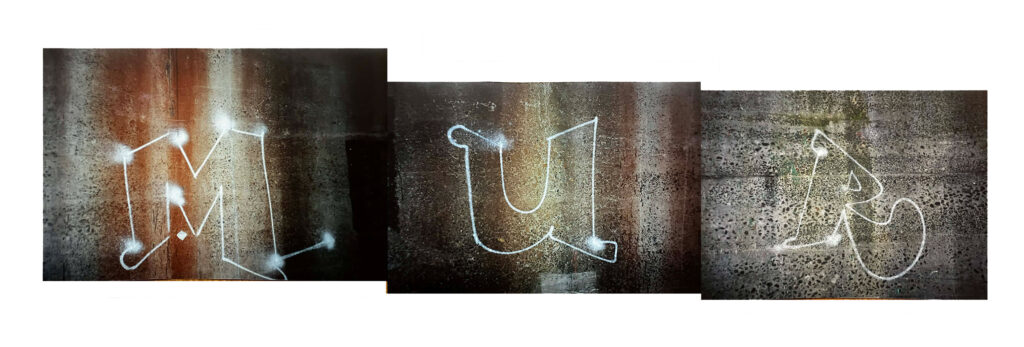
MUR, BMega invisible style outline throw-up, Daikanyama, Tokyo, c. late 1990s.
Three-frame reconstruction documenting a line-based marking strategy that integrates the wall surface into the form, reducing immediate legibility and complicating over-marking by graffiti writers. This outline-based marking strategy reflects an early MUR approach in which the wall surface itself became part of the form. Rather than relying on immediate visual dominance, the throw-up operated through delayed recognition, reading first as fragmented line and only later as a complete intervention. In practical terms, this made over-marking more difficult without forcing another writer to go directly over the placement. In contrast, larger surface occupations operated through sustained visibility. Full-wall pieces and extended placements established a form of territorial presence that was maintained over time, often through revision rather than replacement. This allowed a single intervention to persist within a changing urban environment while adapting to later activity around it.
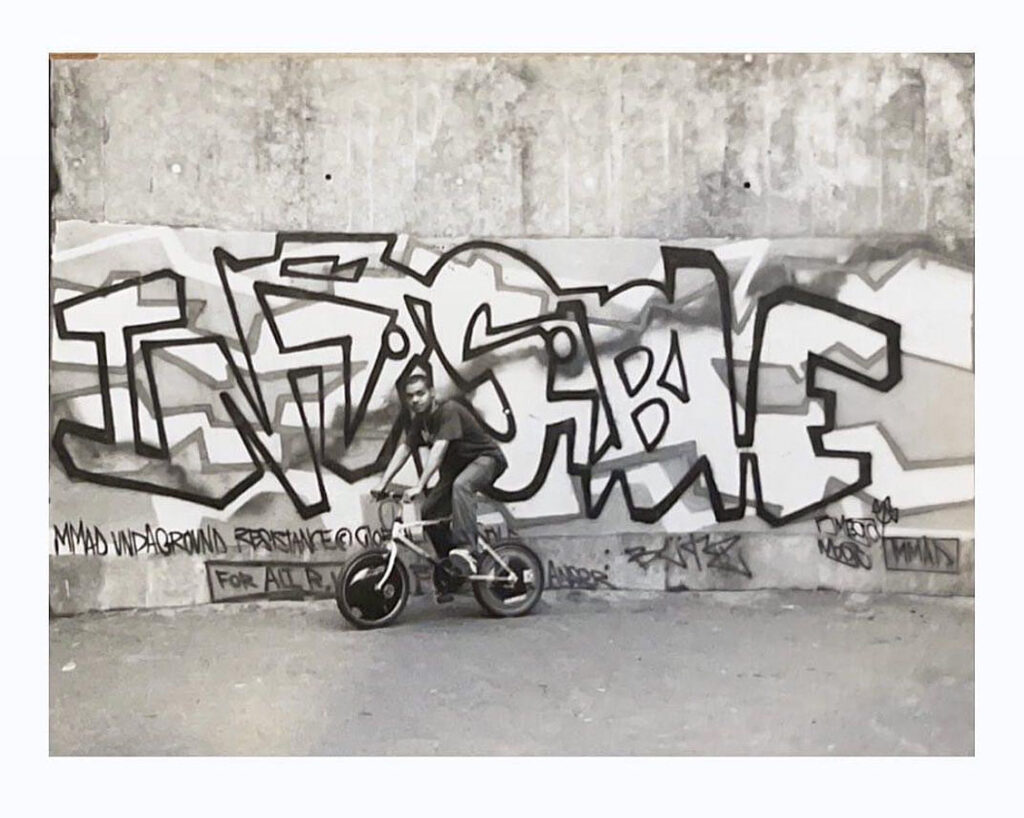
BMega in front of “Invisible,” Yamate-dori, Meguro, Tokyo, c. 1994. Painted by BMega / Blitz; tribute to Ali, R.I.P. (Zoo York), with shout to Anser.
This wall was painted in broad daylight, with the artists wearing painters’ overalls so passers-by would read the action as commissioned work rather than report it as vandalism. Shortly after painting began, a civil servant from the local Meguro ward office approached and asked what was happening. After being told that the existing scrawled tags were an eyesore and that the intention was to replace them with a mural that would improve the space, he agreed and even opened a nearby storage area to lend a stepladder so the upper section could be reached. The incident remains a useful example of how early interventions could pass through informal negotiation rather than simple confrontation. [ View Site Mapping ]

MUR, Dopesac, SHOCHIKUBAI, MYST, Chiba, 2024.
Alongside these visual approaches, MUR also employed distributed naming tactics. Repeated poster-based interventions and photocopied campaigns circulated across multiple locations, reinforcing the presence of the name within the city without relying on a single fixed site. This method extended the group’s visibility beyond individual marks, functioning as a spatial system of repetition and reinforcement.
Across these different modes—low-visibility marking, long-term surface occupation, and distributed naming—the emphasis remained consistent: placement as strategy. Works were not only images but interventions within routes, surfaces, and patterns of movement, establishing presence through endurance, accumulation, and controlled visibility.
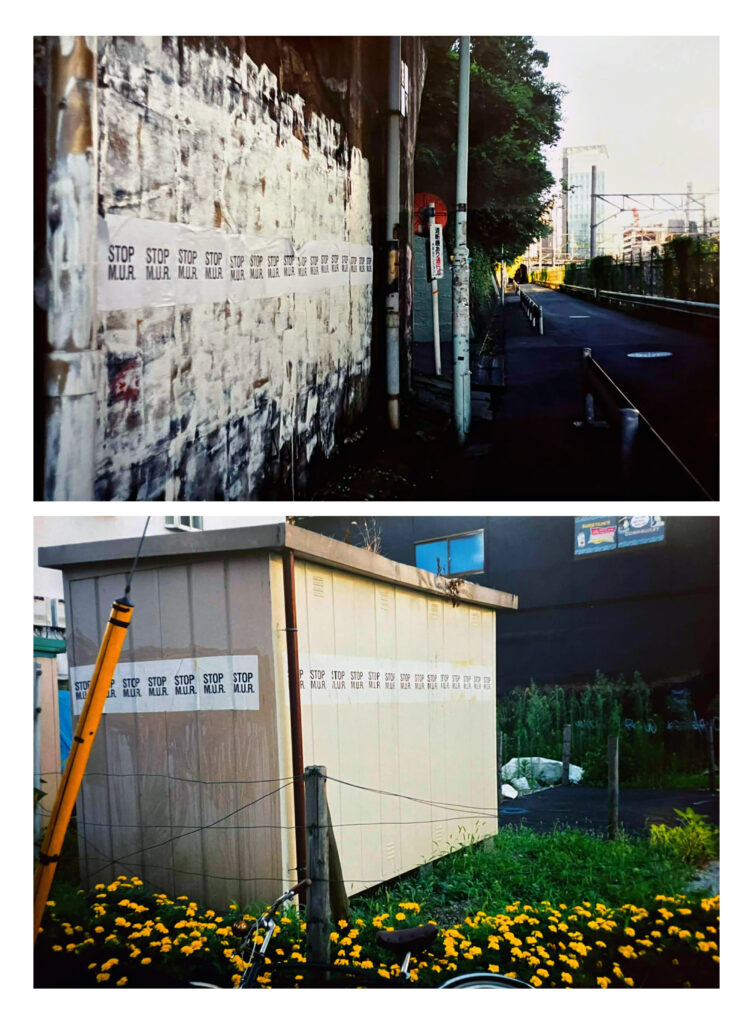
STOP M.U.R. Anti-M.U.R. Campaign, c. 2002.
This intervention reflects a period in which the public reading of “MUR” was being actively renegotiated. By shifting toward the punctuated form “M.U.R.” and circulating repeated photocopied notices across multiple locations, the campaign turned naming itself into a spatial tactic—part clarification, part provocation, part internal myth-making.
Documentation and Evidence
The surviving record of MUR points not to a single visual style, but to a shared operational logic expressed through varied marks, placements, campaigns and associated activity. Rather than prioritising immediate visual dominance, many interventions operated through control of surface, repetition, and the timing of recognition.
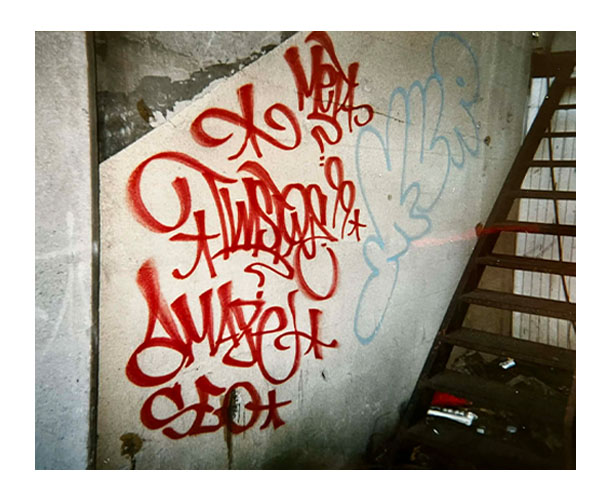
Meta, Twister, aMAZEe, SEO, alongside Dopesac, MUR, 1999.
Alongside these visual approaches, MUR also employed distributed naming tactics. Repeated poster-based interventions and photocopied campaigns circulated across multiple locations, reinforcing the presence of the name within the city without relying on a single fixed site. This method extended the group’s visibility beyond individual marks, functioning as a spatial system of repetition and reinforcement.
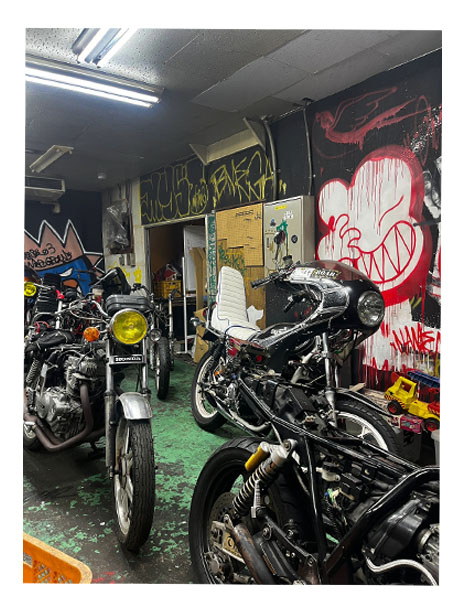
MUR Interior, Shingashi, 2025, SHOCHIKUBAI, Dopesac.
Across these different modes—low-visibility marking, long-term surface occupation, and distributed naming—the emphasis remained consistent: placement as strategy. Works were not only images but interventions within routes, surfaces, and patterns of movement, establishing presence through endurance, accumulation, and controlled visibility.
Documentation of MUR remains limited, uneven, and in many cases deliberately obscured. As with much graffiti activity of the period, a significant portion of its history was not formally recorded and survives primarily through personal archives, photographs, and the recollections of participants.
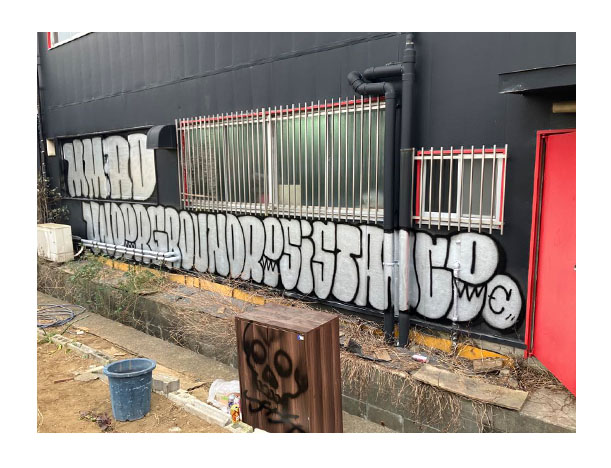
MMAD UNDERGROUND RESISTANCE, Shingashi, 2025, Dopesac.

MUR members / affiliates, Okinawa, 2026, TORU.
Printed material from the time provides only partial traces. Other evidence exists in the form of period photographs, site-specific documentation, and surviving records of interventions within Tokyo’s urban landscape. These materials capture placement, repetition, and surface interaction, but rarely provide explicit attribution or contextual detail.
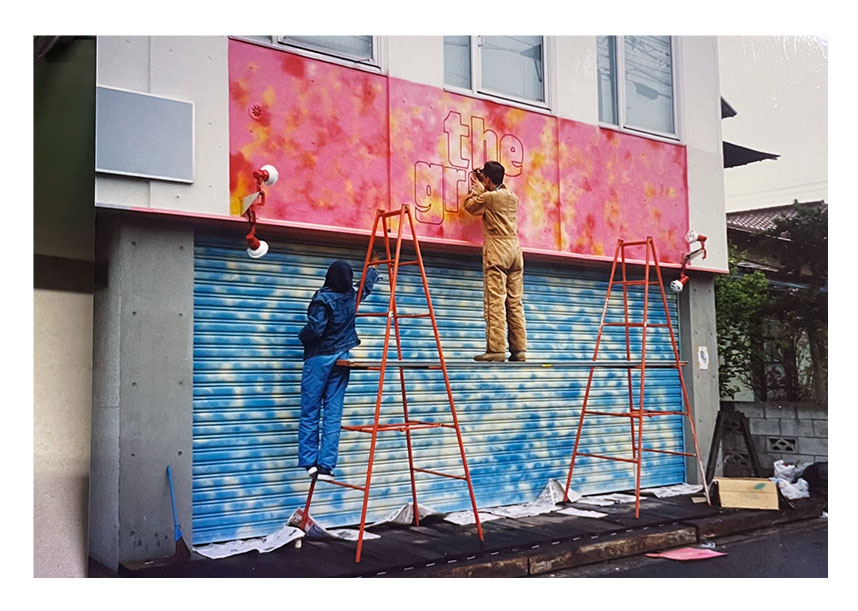
The Grape commission, Kisarazu, Chiba, 1993. Futura2000, BMega, MMAD.
This archive should therefore be understood as a reconstruction assembled from multiple sources: surviving images, printed fragments, and oral accounts. The gaps within it reflect the conditions under which the work was produced—informal, unsanctioned, and often deliberately unrecorded—rather than an absence of activity.
Further clarification depends on the continued recovery of materials and cross-referencing of accounts from individuals active during the period.

Publication Context
The appearance of “MUR Origin” within Kaze Magazine represents one of the few instances in which the name enters a printed format. As with much material connected to Tokyo’s graffiti activity of the period, the context in which such imagery was produced and circulated is only partially documented.
Publications of this type functioned less as formal records and more as snapshots of a broader visual environment. Content was often assembled through proximity to artists, scenes, and networks rather than through systematic documentation, resulting in fragments that reflect presence without fully explaining structure or authorship.
References to MUR within print remain limited and indirect. Rather than providing a complete account, these materials contribute to a wider reconstruction built from dispersed images, partial records, and first-hand accounts.